

Introducing Intelligent Framing: Helping Remote Participants Follow the Conversation in Large Rooms
Tormod Ree, Jun 16, 2026
Large rooms are not designed for hybrid collaboration. Intelligent Framing brings a contextual, AI-powered approach to how conversations are experienced in dynamic meeting spaces.
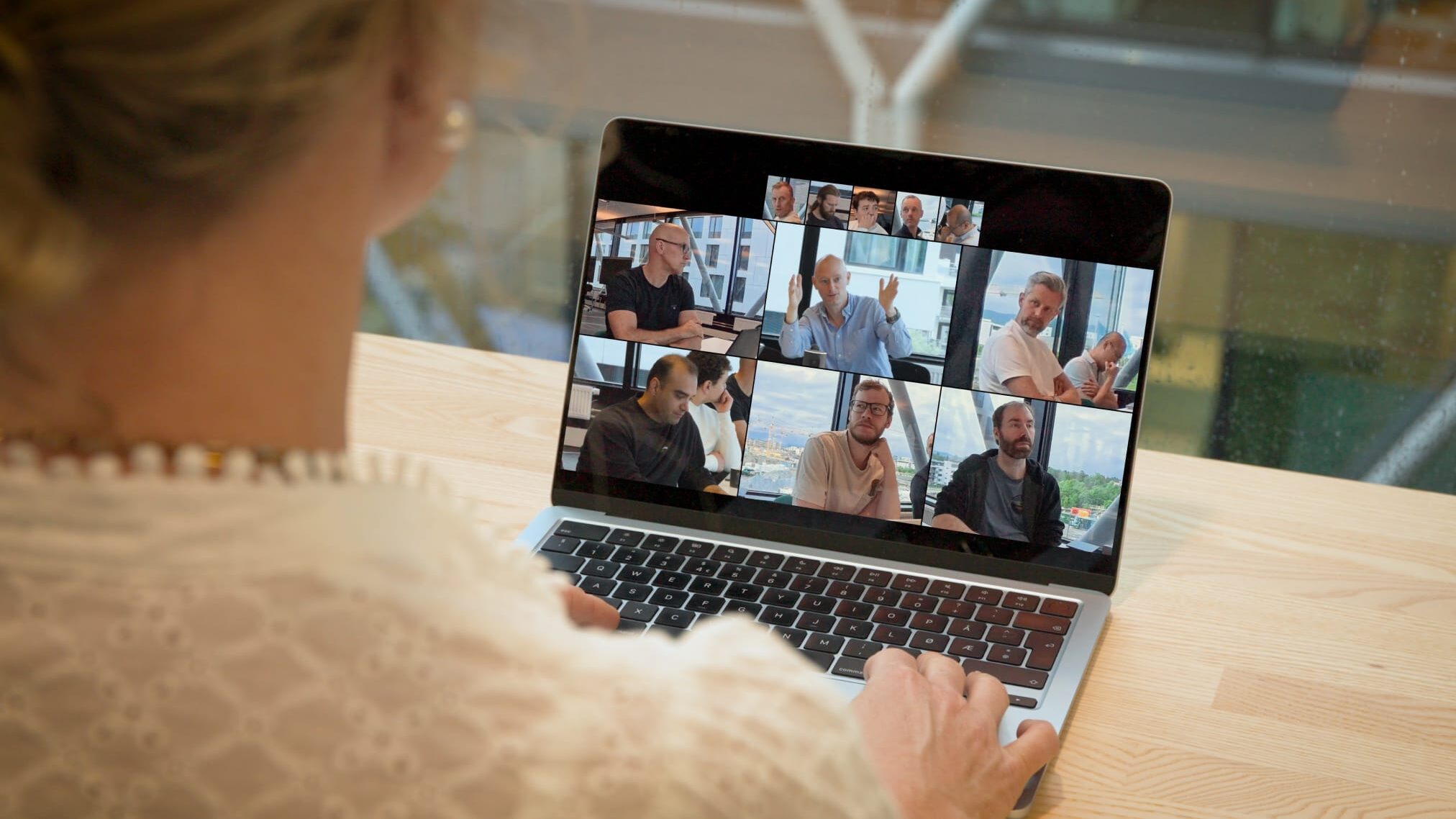
Hybrid meetings have a visibility problem, especially in large rooms. Remote participants are too often reduced to spectators staring at a wall of tiny faces. The conversation keeps moving, but the human element starts to disappear as reactions vanish, body language gets lost, and nobody quite knows where to look. And the larger the room gets, the worse the experience becomes.
That is the gap Neat is targeting with Intelligent Framing
How Intelligent Framing works
Powered by Neat’s distributed AI architecture, Intelligent Framing enables new camera settings for large meeting rooms that adapt in real time to the flow of interaction across the room. Rather than simply reacting to the loudest voice or latest speaker, it considers the broader context of the discussion.
Built on Neat Symmetry, Intelligent Framing expands meeting equity into larger spaces where traditional layouts begin to break down. The goal is simple: bring remote participants into the center of the conversation.
Highlights
Dynamically brings the most relevant participants forward in larger, clearer tiles while keeping everyone else visible in smaller tiles in the background. This helps keep conversations focused without losing the broader social context.
Highlights + Room
Takes that a step further by combining prominent participant views with a full-room perspective. This helps preserve spatial context and the natural dynamics of the conversation while keeping featured participants in focus.
Where framing starts to feel human
Most remote meeting fatigue comes from cognitive friction. People are constantly trying to decode the room: Who reacted to that? Who just started speaking? Why did the camera move? Who is even there?
Intelligent Framing reduces that friction by making the experience feel more instinctive and human. It follows the conversation instead of reacting to noise.
And importantly, it doesn’t force organizations into a dramatic workflow change. Traditional equal-view meeting mode still exists. Intelligent Framing is opt-in and managed through Neat Pulse, giving people the ability to enable and adjust the experience at their own pace.
AI-driven coordination adapts quietly in the background, keeping the meeting itself at the center.
The best meeting technology doesn’t perform for attention. It disappears into the experience and quietly improves the interaction. That’s what makes Intelligent Framing compelling. It’s not trying to turn meetings into a production. It’s trying to restore social clarity to hybrid collaboration.
When rooms and people work as one
Intelligent Framing is part of a broader shift in how meeting rooms understand human interaction.
Rather than simply reacting to whoever is speaking, Neat’s distributed AI architecture helps devices work together in real time to adapt to the flow of conversation across the room.
Large meeting rooms expose the limitations of traditional framing approaches more quickly than almost any other environment. Intelligent Framing is Neat’s answer—not by adding complexity, but by helping remote participants stay connected to both the conversation and the wider context around it.
The right framing isn’t about reacting faster. It’s about understanding the conversation.
Experience Intelligent Framing live at InfoComm, Central Hall, Booth C10507, or book a demo or speak with a Neat specialist.
Intelligent Framing is currently in beta, with general availability planned for H2 2026.