

More Efficient and Effective Meeting Rooms with Neat
Hayley Spooner, Jun 2, 2026
Key takeaways
- Efficient meeting rooms improve productivity, collaboration, and employee satisfaction.
- Poor meeting room experiences can lead to lost time, reduced engagement, and increased operational costs.
- Effective meeting room technology supports seamless collaboration between in-room and remote participants.
- Neat devices simplify deployment, reduce IT support requirements, and improve meeting reliability.
- Neat Pulse enables centralized monitoring and management of meeting room devices.
- Neat Sense provides environmental insights that help organizations create healthier workplaces.
- Future-ready meeting rooms support hybrid work, workplace flexibility, and long-term business growth.
What is meeting room efficiency?
Meeting room efficiency refers to how effectively a meeting space supports productive collaboration while minimizing wasted time, technical issues, and operational costs.
An efficient meeting room enables participants to:
- Start meetings quickly
- Communicate clearly
- Collaborate without technical interruptions
- Include remote and in-person attendees equally
- Make decisions faster
Why meeting room efficiency matters
In today’s fast-paced business world, time and resources are precious. Meetings delayed by technical issues, poor audio-visual quality, or ineffective setups can significantly hinder productivity. Efficient meeting rooms are essential for smooth collaboration, quick decision-making, and effective communication.
Optimizing meeting room setups is crucial to ensuring maximum efficiency. A well-designed layout, appropriate equipment, and clearly defined meeting objectives transform meeting spaces into productive environments. Optimizing meeting room use can also enhance employee satisfaction, streamline communication, and support sustainable practices, positively impacting a company’s bottom line.
Signs your meeting rooms may be hurting productivity
Many organizations experience meeting room inefficiencies without realizing their impact. Common warning signs include:
- Meetings frequently start late because of technology issues
- Remote participants struggle to hear or see in-room attendees
- Employees avoid certain meeting rooms
- IT teams spend excessive time troubleshooting room technology
- Meeting rooms are booked but underutilized
- Hybrid meetings feel less engaging than in-person sessions
- Multiple remotes, cables, and manual setup processes are required
If these challenges sound familiar, it may be time to rethink your meeting room technology strategy.
Meeting room efficiency statistics and research
As hybrid work becomes a permanent feature of modern business, organizations are increasingly evaluating how meeting rooms contribute to collaboration, productivity, and employee experience.
Research consistently shows that employees value flexibility, but successful hybrid work depends on having spaces and technology that enable effective communication between remote and in-office participants. This makes meeting room performance a critical consideration for organizations seeking to improve productivity and workplace effectiveness.
According to CBRE’s Global Workplace and Occupancy Insights research, 89% of large organizations now operate hybrid work programs. As hybrid work becomes embedded into business operations, organizations need meeting spaces that support seamless collaboration regardless of where employees are located.
Similarly, Microsoft’s Work Trend Index research has found that employees increasingly expect flexible working arrangements while maintaining strong collaboration with colleagues. This places greater importance on meeting rooms that deliver inclusive experiences for both in-room and remote participants.
Research from Stanford University economist Nicholas Bloom has also shown that hybrid work can improve employee satisfaction and retention while maintaining productivity when organizations invest in the right workplace tools, policies, and collaboration practices.
Workplace experience research from Leesman highlights that employees place a high value on spaces that support collaboration, knowledge sharing, and productive meetings. Organizations that provide effective meeting environments are better positioned to support employee engagement and workplace performance.
These findings reinforce a common theme across workplace research: as hybrid work becomes the norm, meeting rooms play an increasingly important role in helping organizations collaborate effectively, reduce friction, and create better employee experiences.
Key workplace and meeting room statistics
| Statistic | What it means for organizations |
| 89% of large organizations have formal hybrid work programs (CBRE) | Meeting rooms must support hybrid collaboration as a long-term business requirement. |
| Employees continue to rank collaboration as one of the primary reasons for coming into the office (Microsoft Work Trend Index) | Organizations need spaces designed for productive meetings and teamwork. |
| Hybrid work can improve employee satisfaction and retention when supported by effective workplace practices (Stanford University) | Workplace technology and meeting room experiences directly influence employee outcomes. |
| Employees place significant value on spaces that support collaboration and knowledge sharing (Leesman) | Meeting room quality impacts workplace experience and engagement. |
| Organizations are increasingly redesigning offices around collaboration rather than individual work (CBRE, JLL) | Meeting spaces are becoming one of the most important areas within the modern workplace. |
What the research tells us
The evidence is clear: meeting rooms are no longer simply places to gather. They have become critical collaboration hubs that help organizations connect distributed teams, support hybrid work, and improve employee experiences.
As businesses continue to invest in workplace transformation, reliable meeting room technology, simple user experiences, and effective room management will play an increasingly important role in workplace productivity and organizational success.
What makes a meeting room effective?
| Meeting room factor | Why it matters |
| High-quality audio | Reduces misunderstandings and repetition |
| Reliable video | Improves engagement for remote participants |
| User-friendly controls | Minimizes setup time |
| Platform compatibility | Supports Teams, Zoom, and Google Meet |
| Room scheduling tools | Prevents booking conflicts |
| Environmental monitoring | Supports employee wellbeing |
| Centralized device management | Reduces IT workload |
Best practices for optimizing meeting rooms
Achieving efficient meeting rooms requires more than just technology.
Define clear objectives
Ensure every meeting has a clear agenda, purpose, and desired outcome.
Choose suitable layouts
Select room configurations that support the meeting type, whether boardroom discussions, workshops, or collaborative sessions.
Minimize clutter
Keep spaces organized and free from unnecessary equipment.
Ensure accessibility
Create inclusive environments that support all participants.
Maintain and update technology
Regular software updates and proactive management reduce disruptions and maintain reliability.
The role of effective meeting room technology
Modern meeting room technology underpins productive meetings by enabling clear communication and minimizing disruptions.
Key components include:
- High-quality audio and video
- User-friendly interfaces
- Cross-platform compatibility
- Intelligent meeting experiences
- Environmental monitoring capabilities
- Centralized device management
These capabilities help organizations create inclusive, productive meeting environments that support hybrid work.
How Neat technology supports efficient meeting rooms
Neat delivers advanced video collaboration devices designed to improve meeting room efficiency and effectiveness. Neat devices are known for their simplicity, quality, and innovation.
Neat solutions for common meeting room challenges
| Business challenge | How Neat helps |
| Slow room setup | Plug-and-play deployment |
| Poor meeting audio | Advanced audio processing and noise suppression |
| Unequal hybrid experiences | Intelligent participant framing |
| Device management complexity | Centralized management with Neat Pulse |
| Room scheduling challenges | Neat Pad scheduling and control |
| Workplace wellbeing concerns | Environmental insights through Neat Sense |
| Scaling across offices | Consistent deployment across room types |
Neat devices are certified for Microsoft Teams, Zoom, and Google Meet and integrate seamlessly into existing collaboration workflows.
How Neat makes meeting rooms more efficient
Streamlining setup and reducing downtime
Neat devices are engineered for fast installation and ease of use. Plug-and-play functionality helps reduce deployment complexity while minimizing IT support requirements.
Improving hybrid collaboration
Features such as intelligent framing, advanced audio processing, and high-quality video help ensure remote participants feel included and engaged.
Simplifying device management
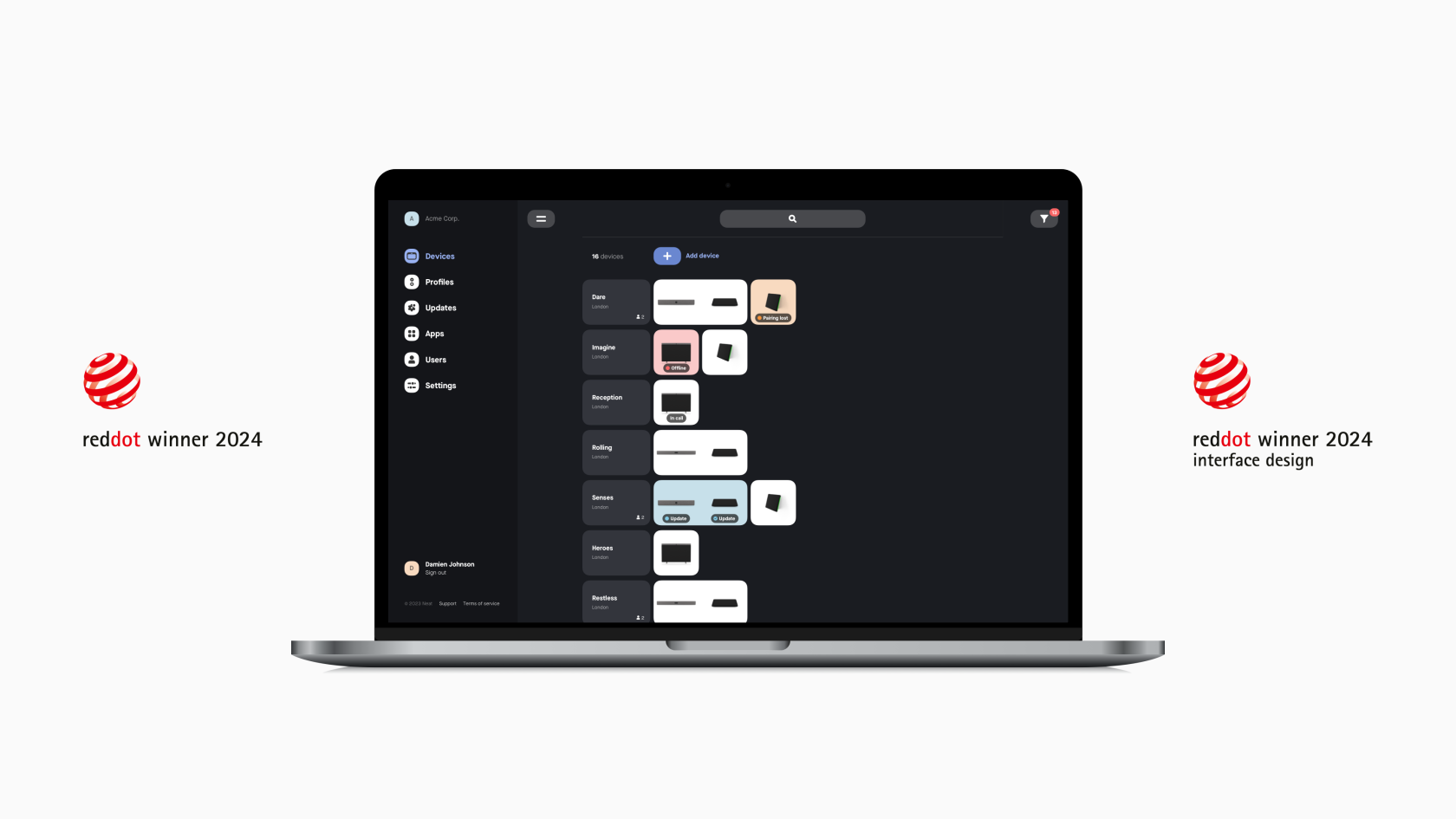
Neat Pulse provides centralized management, monitoring, updates, analytics, and remote troubleshooting capabilities for organizations operating multiple meeting spaces.
Supporting healthier workplaces
Neat Sense monitors occupancy, air quality, humidity, and CO₂ levels, helping organizations create healthier meeting environments.
Future-proofing meeting spaces
Future-ready meeting rooms require technology that evolves alongside workplace needs. Neat supports long-term workplace adaptability through:
- Continuous software updates
- AI-powered meeting experiences
- Ongoing platform compatibility
- Centralized cloud management
- Flexible deployment across room types
This helps organizations remain productive and resilient as workplace expectations continue to evolve.
Neat devices that make a difference
Creating efficient and effective meeting rooms requires technology that removes friction, supports collaboration, and delivers a consistent experience for every participant. Whether employees are joining from the room or remotely, the right tools can help reduce technical issues, improve engagement, and simplify meeting room management.
Neat’s latest portfolio is designed to help organizations create meeting spaces that are easy to use, simple to manage, and ready for the future of hybrid work.
At a glance
| Neat solution | Best for | Key benefit |
| Neat Bar Generation 2 | Small to medium meeting rooms | High-quality audio and video in a simple all-in-one device |
| Neat Board 32 | Flexible workspaces and personal collaboration | Portable collaboration and video conferencing |
| Neat Board 50 | Meeting rooms and collaborative spaces | Interactive meetings, whiteboarding, and content sharing |
| Neat Center | Hybrid meeting enhancement | Improves visibility and inclusion for remote participants |
| Neat Pulse | IT and workplace teams | Centralized management and monitoring of devices |
Neat Bar Generation 2
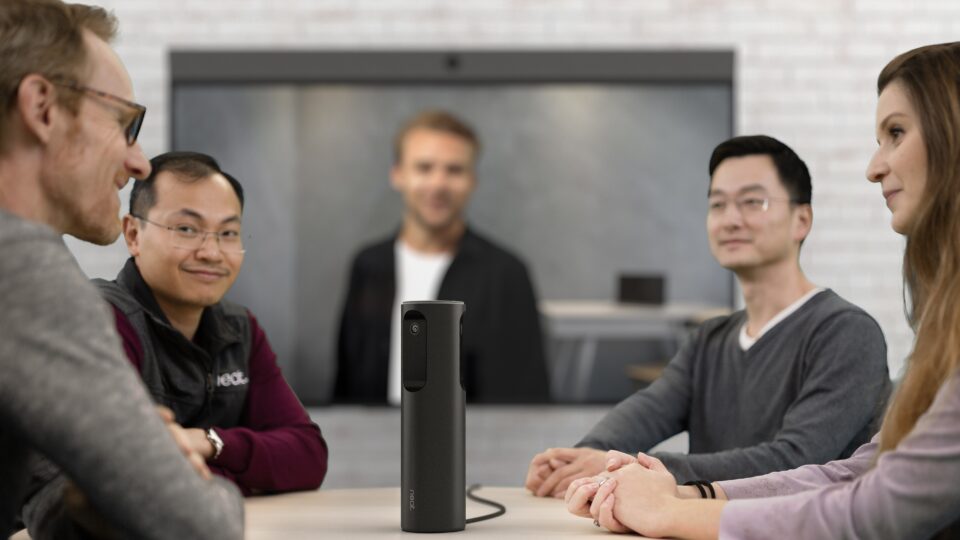
Neat Bar Generation 2 is designed to deliver a seamless meeting experience in small to medium-sized rooms. Combining advanced audio and video technology in a single device, it helps teams start meetings quickly and collaborate effectively without complex setups.
How it helps improve meeting room efficiency:
- Reduces setup time with a simple all-in-one design
- Delivers clear audio and video for productive meetings
- Creates a more inclusive experience for remote participants
- Helps minimize meeting delays caused by technology issues
Neat Board 32
Neat Board 32 brings together video conferencing, content sharing, and collaboration in a highly flexible format. Its compact design makes it ideal for adaptable workspaces, focus rooms, and collaborative environments.
How it helps improve meeting room efficiency:
- Supports spontaneous collaboration
- Enables quick content sharing and presentation
- Creates flexible meeting experiences across different workspaces
- Reduces reliance on multiple devices and peripherals
Neat Board 50
Neat Board 50 combines powerful video conferencing with an immersive touchscreen experience. Designed for meeting rooms and collaborative spaces, it supports brainstorming, workshops, presentations, and hybrid meetings from a single device.
How it helps improve meeting room efficiency:
- Encourages active participation and collaboration
- Simplifies meeting room technology
- Supports digital whiteboarding and interactive sessions
- Enhances engagement for both in-room and remote attendees
Neat Center
Neat Center is designed to improve visibility and inclusion in hybrid meetings. By providing additional room perspectives and helping remote participants see and hear everyone more clearly, it creates a more equitable meeting experience.
How it helps improve meeting room efficiency:
- Improves visibility for remote participants
- Helps ensure all voices are heard during discussions
- Creates a more inclusive hybrid meeting environment
- Supports stronger engagement across distributed teams
Bringing it all together
Meeting room efficiency has become a critical factor in workplace productivity as hybrid work continues to reshape how organizations collaborate. Research consistently shows that employees value flexibility, collaboration, and seamless communication, making effective meeting spaces more important than ever. By combining thoughtful room design, clear meeting practices, and reliable collaboration technology, organizations can reduce friction, improve employee experiences, and support stronger business outcomes. Solutions such as Neat’s video collaboration devices, Neat Pulse, and Neat Sense help address many of the common challenges associated with modern meeting rooms, enabling businesses to create future-ready spaces that support productive, inclusive, and engaging meetings for everyone.
Why not book a demo and experience Neat devices for yourself?
Frequently Asked Questions
What is meeting room efficiency?
Meeting room efficiency refers to how effectively a meeting space supports productive collaboration while minimizing wasted time, technical issues, and operational costs.
Why is meeting room technology important?
Meeting room technology enables clear communication, seamless collaboration, and equal participation for both in-room and remote attendees.
How can businesses improve meeting room efficiency?
Businesses can improve meeting room efficiency by deploying reliable collaboration technology, simplifying room controls, optimizing room layouts, implementing scheduling tools, and ensuring technology remains updated.
What are the most common meeting room problems?
Common issues include poor audio quality, unreliable video conferencing, complicated room controls, booking conflicts, outdated technology, and inconsistent user experiences.
How does Neat improve hybrid meetings?
Neat improves hybrid meetings through intelligent framing, high-quality audio, advanced video capabilities, and intuitive meeting room controls that help remote and in-person participants collaborate more effectively.
What is Neat Pulse?
Neat Pulse is a cloud-based platform that enables organizations to monitor, manage, update, and troubleshoot Neat devices across multiple locations.
What is Neat Sense?
Neat Sense is a built-in capability that provides insights into room occupancy, air quality, humidity, temperature, and CO₂ levels to support healthier workplaces.
Which platforms work with Neat devices?
Neat devices are certified for Microsoft Teams, Zoom, and Google Meet.
How do meeting rooms impact employee productivity?
Efficient meeting rooms reduce delays, improve communication, support faster decision-making, and create a more positive collaboration experience.
Sources
Global Workplace and Occupancy Insights, CBRE
Work Trend Index, Microsoft
The Evolution of Working from Home, Stanford Institute for Economic Policy Research (Nicholas Bloom)
Workplace Experience Research, Leesman
Workplace and Office Design Research, JLL
Meeting Room Setup: Smart Tips for Maximum Efficiency, Leaders Magazine
What Makes an Effective Meeting, HSBC Business Go
How to Run a Meeting, Science of People