

Top 5 Features to Look for in a High-Quality Video Conference Room (2026 Guide)
Hayley Spooner, Jun 3, 2026
Key Takeaways
- High-quality video conference rooms are built around five essential elements: intelligent audio, adaptive video, ease of use, seamless integration, and scalability.
- Audio quality remains the most important factor in meeting success, as clear communication is the foundation of effective collaboration.
- AI-powered video conferencing systems improve engagement through automatic framing, speaker tracking, noise suppression, and real-time adjustments.
- Simple, intuitive meeting room technology reduces setup time, increases adoption, and helps teams focus on collaboration rather than troubleshooting.
- Native integration with platforms such as Microsoft Teams, Zoom, and Google Meet creates smoother workflows and more consistent meeting experiences.
- Scalable solutions allow organizations to deliver the same high-quality collaboration experience across huddle rooms, meeting spaces, and large conference rooms.
- Modern meeting rooms are evolving into intelligent workspaces, using environmental sensors, automation, and analytics to improve both workplace efficiency and employee experience.
- The most effective video conference rooms are not defined by individual features, but by how audio, video, software, and user experience work together as a unified system.
Video conferencing has become the foundation of modern collaboration. In 2026, meeting rooms are no longer designed primarily for in-person interaction. They are hybrid environments where participants join from different locations, devices, and contexts, and expect the same level of clarity, engagement, and ease of use regardless of where they are.
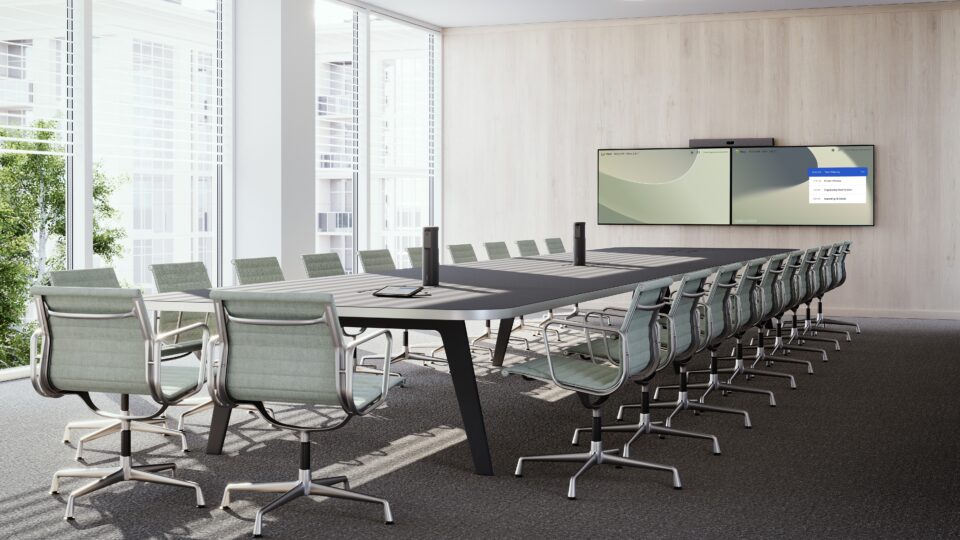
A high-quality video conference room is not defined by a single device or feature. It is defined by how well the entire system works together to support communication and collaboration. Audio, video, software, and user experience must be aligned so that technology fades into the background. When this happens, meetings feel natural, participants stay engaged, and teams can focus on outcomes rather than setup or troubleshooting.
Organizations that understand these principles are better positioned to build meeting environments that are reliable, scalable, and effective in real-world use.
Quick answer: What makes a high-quality video conference room
A high-quality video conference room combines intelligent audio, adaptive video, intuitive user experience, seamless integration, and flexible scalability into a single cohesive system.
In practice, this means meetings start instantly, communication is clear for everyone, and collaboration happens without friction. These systems are not just functional—they are designed to support how people actually work.
1. High-quality audio that adapts to the room
Audio quality remains the most critical element of any video conferencing experience. Research highlights that audio intelligibility is one of the most important factors affecting meeting effectiveness and user satisfaction in collaboration spaces. If participants cannot hear each other clearly, collaboration immediately breaks down, regardless of how good the video or interface may be.
Modern meeting rooms require audio systems that can adapt dynamically to the space and the people in it. This includes microphone arrays that capture voices evenly across the room, as well as advanced processing technologies that remove background noise, echo, and reverberation.
Neat’s approach to audio reflects this shift. Devices such as the Neat Bar use multiple microphones and advanced algorithms to enhance voices while suppressing unwanted noise. These systems continuously adapt to the room’s acoustics, the number of participants, and even environmental changes, ensuring that conversations remain clear and natural throughout the meeting.
This level of intelligence removes the need for manual adjustments and creates a consistent experience, even in larger or more complex spaces.
Audio capability comparison
| Feature | Basic setup | High-quality system |
| Voice pickup | Limited range | Full-room adaptive coverage |
| Noise handling | Minimal | AI noise suppression |
| Echo control | Basic | Advanced processing |
| Clarity | Inconsistent | Consistent and natural |
2. Intelligent video that creates a more natural experience
Video quality is no longer just about resolution. It is about how effectively the system captures and presents participants in a way that feels natural and engaging.
Modern systems use AI-powered capabilities to automatically frame participants, track speakers, and adjust views in real time. The growing adoption of AI across workplace technologies is accelerating investment in capabilities such as automation, intelligent camera systems, and real-time collaboration enhancements. This ensures that remote participants can follow the flow of conversation without needing to manually control the camera.
Neat devices incorporate technologies such as intelligent framing and participant tracking, often referred to as systems like Neat Symmetry. These features dynamically adjust video based on who is speaking, where participants are positioned, and how the conversation evolves.
In practice, this transforms the meeting experience. Instead of watching a static room view, remote participants see a dynamic, responsive environment that reflects the natural flow of interaction.
Video capability comparison
| Feature | Traditional camera | Intelligent system |
| Framing | Static | Automatic and adaptive |
| Coverage | Limited | Full-room visibility |
| Engagement | Lower | Higher |
| Adaptability | Manual | AI-driven |
3. Simplicity and ease of use at every step
One of the most important features of a high-quality video conference room is simplicity. Even the most advanced system will fail to deliver value if it is difficult to use.
Traditional meeting rooms often require multiple steps to start a meeting, including connecting cables, selecting inputs, and configuring devices. This creates friction and delays that reduce productivity.
Modern systems are designed to eliminate these barriers. Neat devices, for example, combine hardware and software into a single integrated system that is ready to use immediately. Meetings can be started with a single interaction, and the system handles the complexity in the background.
This approach reflects a broader shift toward human-centered design, where technology adapts to users rather than requiring users to adapt to technology. The result is faster meeting start times, fewer technical issues, and higher adoption across teams.
User experience comparison
| Aspect | Complex setup | Simple system |
| Setup time | Long | Minimal |
| User training | Required | Minimal |
| Meeting start | Delayed | Immediate |
| Adoption | Lower | Higher |
4. Seamless integration with platforms and workflows
A high-quality video conference room must integrate seamlessly with the tools teams already use. This includes video platforms such as Microsoft Teams, Zoom, and Google Meet, as well as broader collaboration and workflow systems.
Integration ensures that meetings can be joined instantly and that features such as scheduling, content sharing, and collaboration tools work without interruption.
Neat devices are purpose-built for these platforms, providing native integration that eliminates the need for additional configuration. This ensures a consistent experience across rooms and locations, while also allowing meetings to connect directly to workflows and applications.
In 2026, this level of integration is essential. Meetings are no longer isolated events—they are part of a continuous workflow where decisions, actions, and collaboration happen in real time.
Integration impact
| Area | Without integration | With integration |
| Workflow | Disconnected | Continuous |
| Meeting setup | Manual | Automatic |
| User experience | Fragmented | Unified |
| Productivity | Lower | Higher |
5. Scalability and flexibility across different spaces
Organizations need meeting room solutions that work across a wide range of environments, from small huddle rooms to large conference spaces. This requires systems that are both scalable and flexible.
Traditional AV setups often struggle in this area, as they are designed for specific configurations and can be difficult to adapt. Modern systems are built to scale more easily, providing consistent experiences across all room types.
Neat’s portfolio reflects this need for flexibility. Devices such as Neat Bar Generation 2, Neat Board 50, and Neat Bar Pro are designed to support different room sizes while maintaining the same user experience and level of performance.
This allows organizations to standardize their meeting environments, reducing complexity and making it easier to manage systems at scale.
Scalability comparison
| Factor | Fixed system | Scalable system |
| Room types | Limited | Flexible |
| Deployment | Complex | Simple |
| Consistency | Varies | Standardized |
| Expansion | Difficult | Easy |
Additional capabilities shaping modern meeting rooms
Beyond the core features, several additional capabilities are becoming increasingly important in 2026. These include environmental sensors, wireless content sharing, and AI-powered automation.
Neat devices, for example, include built-in sensors that can track room occupancy, air quality, temperature, and humidity. This provides valuable insights into how meeting spaces are used and helps organizations optimize both efficiency and employee wellbeing.
Wireless sharing capabilities allow participants to present content instantly, while AI-powered features such as automatic adjustments and meeting insights further reduce friction.
These capabilities reflect a broader shift toward intelligent meeting environments that adapt to users and provide continuous value beyond the meeting itself.
How these features work together
A high-quality video conference room is not defined by individual features, but by how those features work together as a system.
Audio, video, user experience, integration, and scalability must all be aligned. If one element is missing, the overall experience is reduced. When all elements are integrated, meetings become seamless and productive.
Video conference room system model
| Element | Role | Outcome |
| Audio | Enables communication | Clear conversations |
| Video | Enables visibility | Better engagement |
| UX | Enables usability | Faster meetings |
| Integration | Connects tools | Continuous workflows |
| Scalability | Supports growth | Consistent experience |
Where Neat fits in
In 2026, a high-quality video conference room is defined by how well it supports hybrid work. It must be simple to use, intelligent in operation, and flexible enough to adapt to different room sizes, working styles, and collaboration needs. Most importantly, it must bring together high-quality audio, intelligent video, seamless integration, and scalability into a single cohesive experience.
This is where Neat fits in.
Neat’s portfolio is built around the same principles that define modern video conferencing success. Rather than treating cameras, microphones, speakers, room controls, and management tools as separate technologies, Neat combines them into integrated systems designed specifically for the realities of hybrid collaboration.
For small and medium-sized meeting spaces, Neat Bar Generation 2 combines a high-resolution camera system, advanced microphone array, AI-powered audio processing, and intelligent framing into a single device. The system continuously adapts to room conditions, participant movement, and conversation dynamics to ensure everyone can be clearly seen and heard. Features such as automatic framing, speaker tracking, noise suppression, and voice enhancement help create a more natural experience for both in-room and remote participants.
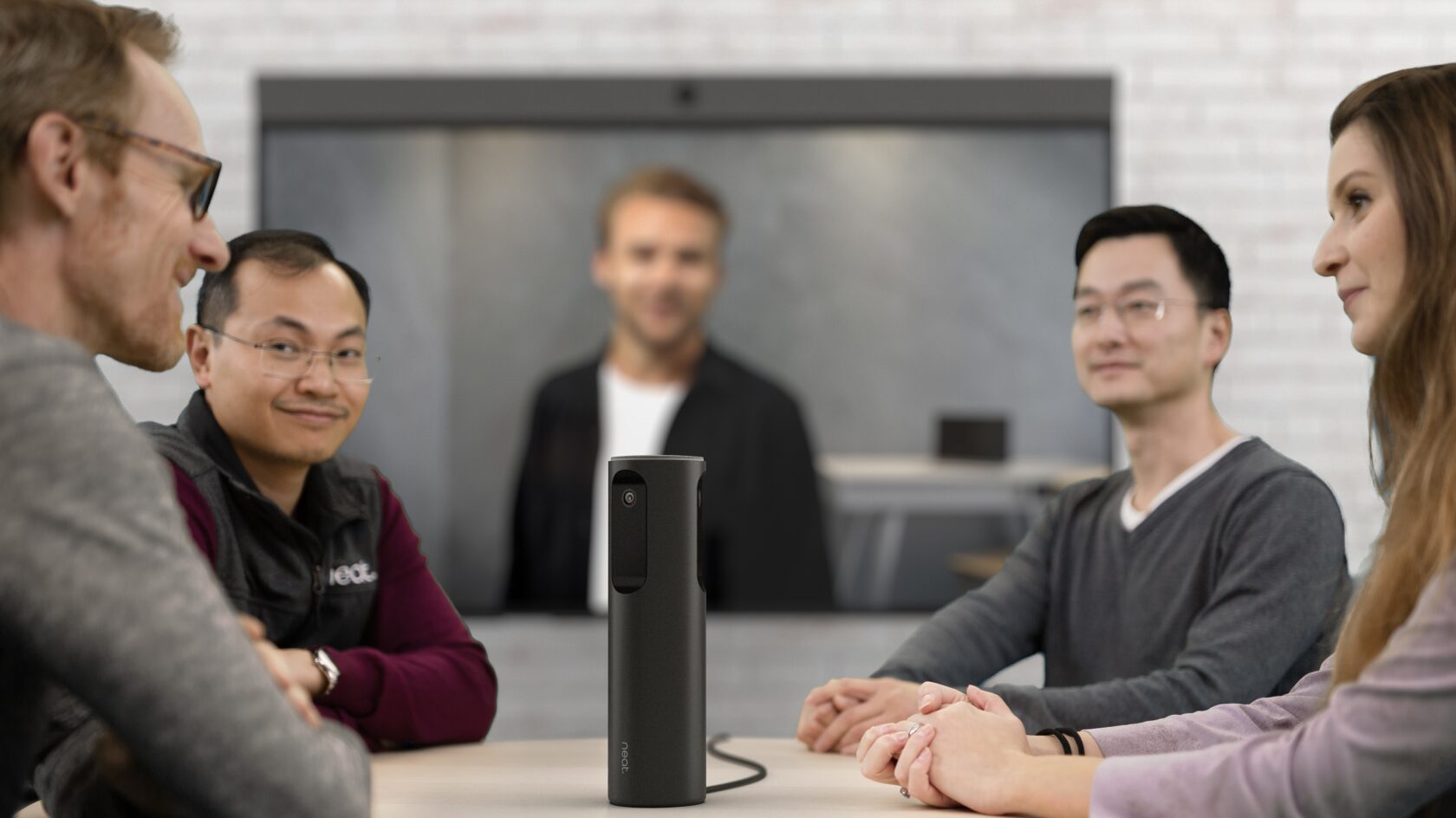
Meeting equity—one of the most important considerations in hybrid collaboration—is further enhanced through Neat Center. Designed as a companion device for larger and more complex spaces, it uses multiple cameras and beamforming microphones to extend visibility and audio coverage throughout the room. This helps ensure that remote participants remain fully included in conversations, regardless of where people are seated or moving within the space.
For organizations looking to combine video conferencing with interactive collaboration, Neat Board 50 and Neat Board Pro bring together video meetings, digital whiteboarding, wireless content sharing, and touch interaction in a single device. This allows teams to move seamlessly between discussion, brainstorming, presenting, and problem-solving without switching between multiple tools or systems.
Beyond audio and video performance, Neat devices are designed around simplicity. Meetings can be joined quickly, systems require minimal training, and the technology operates largely in the background. This aligns directly with one of the key themes of this article: the best meeting room technology is technology that users barely need to think about.
Neat devices also integrate natively with leading collaboration platforms, including Microsoft Teams, Zoom, and Google Meet, helping organizations create consistent meeting experiences across rooms, offices, and locations. At the same time, built-in environmental sensors provide insights into room occupancy, air quality, temperature, and humidity, helping organizations better understand how spaces are used and how workplace environments can be optimized.
As organizations scale their collaboration environments, Neat Pulse provides centralized management, monitoring, analytics, and software updates across devices and locations. This enables IT teams to maintain consistency, simplify administration, and support growing hybrid work environments without adding unnecessary complexity.
Ultimately, the five features explored throughout this article—high-quality audio, intelligent video, ease of use, seamless integration, and scalability—are not standalone requirements. They work together to create meeting experiences that are productive, inclusive, and effortless. By combining AI-powered technology, thoughtful design, and a unified platform approach, Neat helps organizations build video conference rooms that support better collaboration today while remaining ready for the future of work.
Discover Neat’s pioneering devices or book a demo and experience them for yourself.
Frequently asked questions
What is the most important feature in a video conference room?
Audio quality is the most important, as it directly affects communication and understanding.
Why is simplicity important?
Simple systems reduce delays, improve adoption, and allow users to focus on collaboration rather than technology.
How does AI improve video conferencing?
AI enables automatic adjustments, improves audio and video quality, and reduces manual tasks.
Why is scalability important?
Scalable systems allow organizations to maintain consistency across multiple meeting spaces and adapt as needs change.
Sources
Work Trend Index Annual Report 2025, Microsoft WorkLab
https://www.microsoft.com/en-us/worklab/work-trend-index/2025-the-year-the-frontier-firm-is-born
Global Human Capital Trends, Deloitte
https://www.deloitte.com/global/en/issues/work/human-capital-trends.html
AI Index Report 2025, Stanford Institute for Human-Centered Artificial Intelligence (HAI)
https://hai.stanford.edu/ai-index/2025-ai-index-report
Future of Jobs Report 2025, World Economic Forum
https://www.weforum.org/reports/the-future-of-jobs-report-2025
The Future of Work After COVID-19, McKinsey & Company
https://www.mckinsey.com/featured-insights/future-of-work/the-future-of-work-after-covid-19
Conferencing & Collaboration, AVIXA
The 2025 AI Index Report, Stanford University.