

Top Video Conferencing Trends for 2026: What’s Changing and Why It Matters
Hayley Spooner, Jun 3, 2026
Key takeaways
- Artificial intelligence is becoming a foundational layer of modern video conferencing, automating tasks such as transcription, summaries, action items, and meeting optimization.
- Smart meeting rooms are reducing friction through wireless connectivity, simplified controls, and seamless user experiences.
- Multi-camera systems and immersive technologies are improving engagement and creating more natural hybrid meeting experiences.
- Video conferencing platforms are increasingly integrated with business applications, allowing meetings to connect directly to workflows and collaboration tools.
- Asynchronous video communication is helping organizations reduce meeting fatigue while improving flexibility and knowledge sharing.
- Hybrid work continues to drive demand for reliable, inclusive meeting experiences that support both remote and in-office participants.
- Sustainability is becoming a key consideration, with organizations seeking energy-efficient and operationally streamlined collaboration technologies.
- Video conferencing is evolving from a communication tool into a broader collaboration platform that supports how modern organizations operate.
Video conferencing has moved beyond being a simple communication tool. In 2026, it forms the foundation of how organizations collaborate, make decisions, and operate across locations. As hybrid work has matured, expectations around meetings have shifted. It is no longer enough to connect people—organizations now need meeting experiences that are intelligent, seamless, and inclusive.
These changes are being driven by rapid advances in technology and evolving workplace behaviors. Video conferencing systems are becoming more integrated, more adaptive, and more aligned with how teams actually work. Understanding these trends is essential for organizations that want to improve collaboration, reduce friction, and create more effective meeting environments.
Quick answer: Key video conferencing trends for 2026
The most important video conferencing trends in 2026 include the rise of Artificial Intelligence (AI) as a core component of meetings, the shift toward smarter and more flexible meeting rooms, the adoption of multi-camera and immersive experiences, deeper integration with business tools, the growth of asynchronous video communication, and an increasing focus on sustainability and efficiency.
Taken together, these trends reflect a broader transformation. Video conferencing is no longer a standalone tool. It is becoming a complete system for collaboration.
AI becomes the foundation of video conferencing
Artificial intelligence is now central to how video conferencing works. What began as a set of optional features has evolved into a core layer that shapes the entire meeting experience.
In 2026, AI supports meetings before, during, and after they take place. It can generate real-time transcriptions, summarize discussions, identify action items, and improve accessibility through live captions and translation. Beyond this, AI is increasingly responsible for optimizing the meeting itself. Cameras can automatically frame participants and track speakers, while audio systems adjust dynamically to balance voices and reduce background noise.
This shift changes the nature of meetings. Instead of being static interactions, they become adaptive environments that respond to participants in real time. The result is clearer communication, reduced manual effort, and more efficient workflows.
How AI is changing meetings
| Capability | Traditional meetings | AI-enabled meetings |
| Note-taking | Manual | Automatic summaries |
| Audio/video | Static | Adaptive and optimized |
| Follow-ups | Manual tracking | AI-generated actions |
| Accessibility | Limited | Real-time captions and translation |
Meeting rooms become smarter and easier to use
Meeting rooms are evolving to remove friction from the meeting experience. In the past, users often needed to connect cables, configure devices, or navigate multiple systems just to start a meeting. In 2026, the focus is on simplicity.
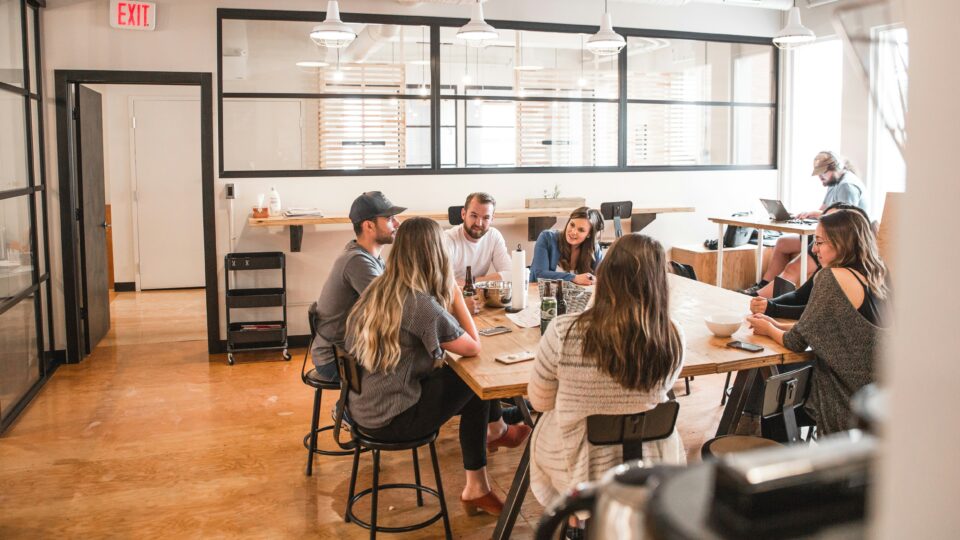
Modern meeting rooms are designed to work immediately. Wireless sharing replaces physical connections, devices connect automatically, and meetings can be joined with a single interaction. The technology becomes part of the environment rather than something users need to manage.
This shift is particularly important in hybrid work environments, where consistency across rooms and locations is essential. When meeting rooms are easy to use, meetings start on time, and participants can focus on collaboration rather than setup.
Smart meeting room evolution
| Feature | Legacy rooms | 2026 meeting rooms |
| Setup | Manual and complex | Automatic and instant |
| Connectivity | Wired | Wireless |
| Controls | Multiple systems | Unified interface |
| User experience | Inconsistent | Seamless |
Multi-camera and immersive experiences become standard
As meetings grow in size and complexity, single-camera setups are no longer sufficient. In 2026, multi-camera systems are becoming the norm, particularly in larger rooms.
These systems provide multiple perspectives, allowing remote participants to see different parts of the room and follow conversations more naturally. Intelligent switching ensures that the focus moves to the active speaker, while wide-angle views maintain context.
At the same time, immersive meeting experiences are evolving. While still emerging, technologies such as augmented reality and advanced visual layouts are beginning to reshape how participants interact with digital content and each other.
The overall goal is to make remote participation feel less like watching a meeting and more like being part of it.
Multi-camera vs single-camera setups
| Setup | Limitation | Advantage |
| Single camera | Limited visibility | Simple setup |
| Multi-camera | More complex system | Full-room engagement |
| AI-driven views | Automated switching | Natural interaction |
Integration replaces standalone tools
Video conferencing is no longer isolated from the rest of the workplace. In 2026, it is deeply integrated into broader workflows and systems.
Meetings now connect directly with calendars, project management tools, customer platforms, and collaboration applications. This allows information to move seamlessly between discussions and execution. For example, decisions made in a meeting can automatically generate tasks or update workflows without requiring manual input.
This level of integration reduces friction and improves continuity. Meetings become part of an ongoing process rather than a separate event, enabling teams to move more efficiently from discussion to action.
Integration impact
| Area | Without integration | With integration |
| Workflow | Disconnected | Seamless |
| Data flow | Manual | Automated |
| Productivity | Fragmented | Continuous |
| User experience | Complex | Unified |
Asynchronous video becomes part of everyday communication
Not all communication needs to happen in real time. In 2026, asynchronous video is becoming an important complement to live meetings.
Teams are increasingly using recorded video for updates, training, and knowledge sharing. This allows participants to engage with content at their own pace, reducing the need for unnecessary meetings and improving flexibility.
Live meetings are still essential for collaboration and decision-making, but asynchronous video helps reduce overload and ensures that time is used more effectively.
Synchronous vs asynchronous communication
| Type | Use case | Benefit |
| Live meetings | Discussions, decisions | Real-time interaction |
| Async video | Updates, training | Flexible and efficient |
Hybrid work continues to shape video conferencing
Hybrid work is now a permanent feature of many organizations. As a result, video conferencing systems are expected to support both in-room and remote participants equally.
This has led to a stronger focus on meeting equity. Participants should be able to see, hear, and contribute regardless of location. Achieving this requires better room design, improved audio and video systems, and more consistent experiences across environments.
Organizations are increasingly investing in dedicated room-based systems that provide higher quality and greater reliability than individual devices alone.
Sustainability becomes a key consideration
Sustainability is playing a growing role in how organizations evaluate video conferencing solutions. While video conferencing has already reduced the need for travel, attention is now shifting to the environmental impact of the technology itself.
Companies are considering factors such as energy efficiency, hardware lifecycle, and overall system design. Efficient, integrated systems not only reduce environmental impact but also improve operational efficiency by minimizing complexity and resource use.
Sustainability impact of video conferencing
| Area | Traditional approach | Modern approach |
| Travel | Frequent | Reduced |
| Hardware | Energy-intensive | Efficient design |
| Operations | Fragmented | Optimized systems |
Video conferencing becomes the operating system of work
The most significant change in 2026 is conceptual. Video conferencing is no longer just a tool—it is becoming the operating system of hybrid work.
Meetings now take place across conference rooms, home offices, and mobile environments. The systems that support these meetings determine how effectively teams can collaborate.
Organizations that succeed are those that create integrated, reliable environments where communication flows naturally. Rather than focusing on individual tools, they focus on building systems that support the entire collaboration process.
How these trends work together
These trends are not isolated. They reinforce each other to create a more complete and effective collaboration environment.
Artificial intelligence improves meeting quality and reduces manual work. Smart meeting rooms remove friction and simplify interaction. Integration connects meetings to workflows, and asynchronous communication provides flexibility. Together, these elements create a system that supports how modern work actually happens.
The 2026 video conferencing system
| Layer | Role | Outcome |
| AI | Automates and enhances meetings | Smarter workflows |
| Room systems | Enable physical collaboration | Better hybrid experiences |
| Integration | Connects tools and data | Seamless work |
| Communication modes | Live and async video | Efficient collaboration |
Bringing it all together
Video conferencing in 2026 is defined by intelligence, integration, and experience. The focus has shifted from simply enabling communication to creating environments where collaboration happens naturally.
Organizations that understand and adopt these trends will be better equipped to support hybrid work, improve productivity, and create more engaging meeting experiences. As video conferencing continues to evolve, it will remain central to how modern work is done.
Where Neat fits in
As organizations adopt AI-powered collaboration, smarter meeting rooms, and integrated workflows, the challenge is no longer simply choosing a video conferencing platform. The real challenge is creating a consistent meeting experience across every room, office, and location.
This is where Neat fits in.
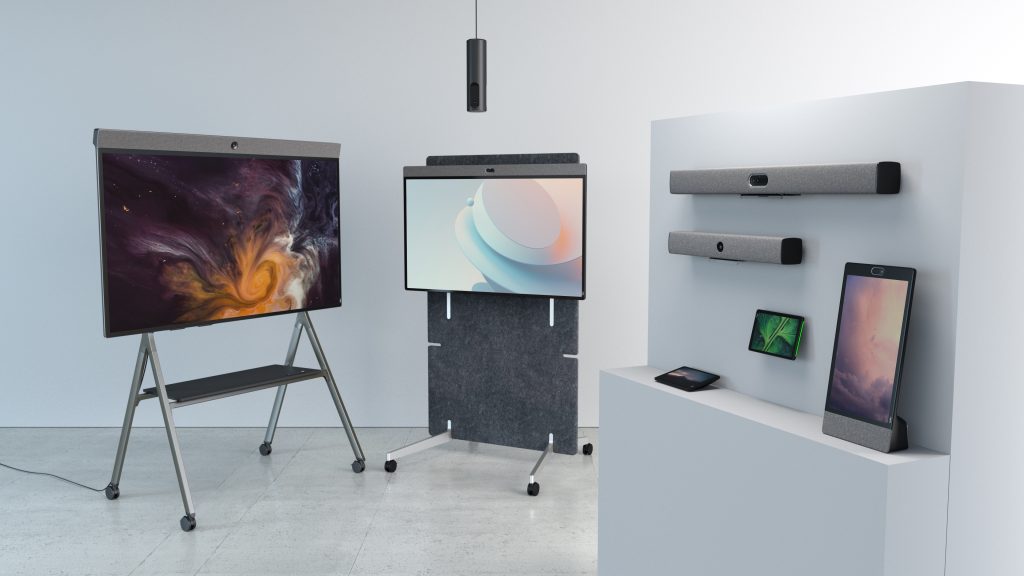
Neat’s portfolio of purpose-built video devices is designed to simplify the meeting experience while supporting the demands of modern hybrid work. Rather than requiring complex room configurations or extensive user training, Neat devices are designed to make joining, hosting, and managing meetings intuitive and reliable.
Neat’s approach aligns closely with several of the key trends shaping video conferencing in 2026:
| Trend | How Neat supports it |
| AI-enhanced meetings | Intelligent camera framing, speaker tracking, and advanced audio capabilities help create more engaging and equitable meetings. |
| Smart meeting rooms | Purpose-built devices simplify setup, reduce friction, and deliver a consistent experience across spaces. |
| Hybrid collaboration | High-quality audio and video help ensure remote participants feel included and heard. |
| Flexible workspaces | Solutions are designed for a wide range of environments, from focus rooms to large conference spaces. |
| Operational simplicity | Centralized device management and streamlined deployment help IT teams scale collaboration technology more efficiently. |
As video conferencing continues to evolve into the operating system of hybrid work, organizations need technology that not only supports meetings today but can adapt to future ways of working. By focusing on simplicity, reliability, and user experience, Neat helps organizations build collaboration environments that are ready for what’s next.
AI the Neat way
Another emerging trend is the shift toward more intelligent meeting environments. As AI capabilities continue to evolve, organizations are looking beyond individual features and toward systems that can actively enhance the entire meeting experience. Rather than relying on separate tools and manual controls, modern collaboration spaces are becoming more responsive, with devices and technologies working together to automatically adapt to participants, conversations, and room dynamics.
This evolution reflects a broader move toward seamless collaboration. Intelligent environments can improve audio and video quality, optimize participant visibility, and reduce the effort required to manage meetings. By embedding intelligence throughout the meeting space, organizations can create experiences that feel more natural and inclusive while simplifying deployment and management. As hybrid work continues to mature, these adaptive environments are likely to play an increasingly important role in how teams connect and collaborate.
Discover Neat’s pioneering devices or book a demo and experience them for yourself.
Frequently asked questions
What is the biggest video conferencing trend in 2026?
The most significant trend is the integration of AI as a core part of the meeting experience, enabling automation, optimization, and improved accessibility.
How is hybrid work influencing video conferencing?
Hybrid work is driving the need for better meeting room systems, consistent user experiences, and equal participation for all attendees.
Are video meetings replacing in-person meetings?
Video meetings are complementing in-person interactions, creating more flexible and scalable collaboration models.
Why is integration important in video conferencing?
Integration allows meetings to connect directly to workflows, reducing friction and improving productivity.
Sources
- The Economic Potential of Generative AI: The Next Productivity Frontier, McKinsey & Company
- Digital Workplace, Gartner
- What Is Asynchronous Communication? Benefits, Challenges, and Examples, Atlassian