

Virtual Collaboration Devices: How the Right Technology Improves Teamwork in 2026
Hayley Spooner, Jul 16, 2026

Key takeaways
- Virtual collaboration devices help distributed teams communicate and collaborate more effectively.
- Modern collaboration extends beyond webcams to include intelligent video devices, interactive displays, AI-powered meeting technology, and integrated collaboration platforms.
- High-quality collaboration technology reduces meeting friction and creates more equitable meeting experiences.
- AI is becoming a foundational part of virtual teamwork.
- Choosing flexible, future-ready collaboration technology helps organizations adapt to changing workplace needs.
- Integrated collaboration devices simplify deployment, management, and the overall user experience.
- The best collaboration technology supports people and workflows rather than adding unnecessary complexity.
The workplace has changed dramatically over the past few years. Hybrid work is now an established way of working for many organizations, with employees collaborating across offices, homes, and time zones every day.
As a result, virtual collaboration has become far more than simply joining a video call. Teams now expect technology that enables natural conversations, effortless content sharing, seamless brainstorming, and productive meetings regardless of where participants are located.
Research from JLL’s Workplace Design and Trends highlights the growing importance of designing workplaces that support collaboration, flexibility, and employee experience as organizations adapt to evolving ways of working.
Virtual collaboration devices play a central role in delivering these experiences. From personal collaboration devices and video bars to interactive displays and AI-powered meeting technology, the right solutions help teams communicate more effectively while reducing the technology barriers that can interrupt collaboration.
This guide explores what virtual collaboration devices are, why they matter, and how organizations can choose technology that supports better teamwork in 2026 and beyond.
What are virtual collaboration devices?
Virtual collaboration devices are purpose-built hardware solutions that help people communicate and collaborate seamlessly, regardless of where they are working.
Unlike traditional office equipment, these devices are specifically designed to support hybrid collaboration by combining high-quality audio, video, content sharing, and intelligent software into simple, integrated experiences.
Examples include:
- Personal collaboration devices
- Video bars
- Interactive collaboration boards
- Touch controllers
- Companion collaboration devices
- Room scheduling displays
These technologies help create more engaging meetings while supporting collaboration across offices, homes, and remote locations.
As collaboration technology continues to evolve, virtual collaboration devices increasingly incorporate AI-powered capabilities, workplace intelligence, and simplified management tools that improve both the employee experience and operational efficiency.
Why virtual collaboration technology matters more than ever
Today, collaboration technology underpins productivity rather than simply enabling meetings.
Meetings now frequently include participants joining from multiple locations using different devices and collaboration platforms. Without the right technology, communication can quickly become fragmented, creating delays, misunderstandings, and frustration.
Research from Microsoft Research’s Future of Work research shows that AI and collaboration technologies are becoming increasingly important in helping employees work more effectively across distributed teams.
Modern collaboration technology helps organizations:
- Improve communication
- Support hybrid work
- Reduce meeting friction
- Increase employee engagement
- Enable faster decision-making
- Improve collaboration across distributed teams
Rather than simply enabling meetings, today’s collaboration technology helps organizations create environments where teams can work together naturally regardless of location.
Types of virtual collaboration devices
Different workspaces require different collaboration technologies.
Understanding the role each device plays helps organizations build collaboration environments that support a wide variety of meeting types.
| Device type | Typical use |
| Personal collaboration device | Individual workspaces and home offices |
| Video bar | Small and medium meeting rooms |
| Interactive collaboration board | Workshops, brainstorming, presentations |
| Touch controller | Meeting room controls and scheduling |
| Companion collaboration device | Expanded audio and video coverage |
The most effective collaboration environments combine different device types to support a variety of work styles and meeting spaces.
Rather than deploying identical technology everywhere, organizations should align collaboration devices with the way each workspace is used. This creates a more consistent employee experience while making better use of technology investments.
How virtual collaboration devices improve teamwork
The biggest advantage of modern collaboration technology is that it removes barriers between people, not just between locations.
The right technology allows teams to focus on conversations, creativity, and decision-making instead of troubleshooting meeting rooms or struggling to hear colleagues.
Better communication
Clear audio and high-quality video help teams communicate more naturally and reduce misunderstandings that can occur during remote meetings. Participants spend less time repeating themselves and more time contributing to meaningful discussions.
Improved meeting equity
Modern collaboration technology helps ensure remote participants can contribute as effectively as colleagues who are physically present in the room. Intelligent framing, adaptive audio, and thoughtfully designed meeting experiences help everyone feel included.
Reduced meeting friction
Employees increasingly expect meetings to start immediately.
Integrated collaboration devices simplify room setup by reducing cables, eliminating unnecessary hardware, and providing intuitive meeting experiences. This minimizes delays and allows teams to focus on work rather than technology.
More engaging hybrid meetings
Interactive collaboration tools, wireless content sharing, and intelligent camera technologies create more engaging experiences for both in-person and remote participants, making collaboration feel more natural.
Greater flexibility
Modern collaboration devices support a wide variety of workstyles, including brainstorming sessions, customer meetings, workshops, presentations, agile project reviews, and informal collaboration.
AI-powered productivity
AI-powered capabilities such as meeting summaries, transcription, intelligent framing, speaker identification, and workflow automation help teams spend less time on administration and more time collaborating.
Choosing the right collaboration technology
The best collaboration technology should adapt to your business—not force your business to adapt to the technology.
Selecting collaboration technology starts with understanding how people work rather than focusing solely on technical specifications.
When evaluating virtual collaboration devices, consider:
- Workspace size
- Number of participants
- Collaboration platform compatibility
- AI capabilities
- Wireless content sharing
- Centralized device management
- Long-term scalability
Organizations should also consider future workplace requirements. Collaboration technology investments should be flexible enough to evolve alongside changing business needs and emerging AI capabilities.
A useful evaluation framework is shown below.
Key collaboration technology trends shaping 2026
The biggest shift in 2026 is that collaboration technology is becoming more intelligent, more flexible, and increasingly AI-driven.
Organizations are no longer evaluating collaboration devices based solely on hardware specifications. Instead, they are looking for solutions that improve employee experience, simplify IT management, and adapt as workplace technology evolves.
AI becomes infrastructure
Artificial Intelligence is becoming embedded throughout the meeting experience.
Meeting summaries, live transcription, intelligent search, workflow automation, and AI assistants are increasingly expected rather than treated as optional features. As AI capabilities continue to mature, collaboration devices need to provide the high-quality audio and video inputs that allow these tools to perform at their best.
This growing reliance on AI aligns with broader industry research from McKinsey & Company, which highlights how integrated Audio Visual (AV) and collaboration technologies are reshaping the modern workplace.
Platform flexibility
Businesses increasingly want collaboration technology that supports the platforms they already use while remaining flexible enough to adopt future applications and AI experiences.
This shift reflects a growing recognition that workplace technology should evolve alongside business needs, rather than locking organizations into a single ecosystem.
Intelligent meeting spaces
Modern meeting rooms are becoming more responsive and adaptive.
Features such as intelligent framing, adaptive audio, occupancy awareness, and automated room experiences help meetings run more naturally while reducing the need for manual adjustments.
Simplicity by design
Organizations continue to move away from fragmented AV systems towards integrated collaboration devices that are easier to deploy, manage, and support.
Reducing complexity benefits both employees and IT teams, helping meetings start faster while lowering ongoing support requirements.
Common mistakes to avoid
Successful collaboration environments prioritize simplicity, consistency, and user experience over feature lists.
Even well-planned collaboration projects can fall short if technology isn’t aligned with how people actually work.
Some of the most common mistakes include:
- Choosing features over usability
- Ignoring meeting equity
- Overcomplicating meeting room technology
- Selecting solutions that cannot adapt to future AI capabilities
- Failing to consider long-term management requirements
- Designing collaboration spaces around technology instead of employee needs
The most successful organizations build collaboration environments that remove barriers, encourage participation, and support productive teamwork wherever employees are located.
Where Neat fits in
Neat’s philosophy is that the best collaboration technology should feel almost invisible, allowing people to focus on conversations rather than the technology itself.
Virtual collaboration is no longer just about connecting people through video calls. Increasingly, it’s about creating intelligent meeting experiences that help teams communicate, collaborate, and make decisions more effectively wherever they are working.
Neat’s approach is built around making those experiences as simple and natural as possible. Rather than requiring organizations to combine multiple hardware and software components, Neat delivers purpose-built collaboration devices that integrate intelligent audio, advanced video, touch interaction, and AI-ready capabilities into seamless user experiences.
For personal workspaces, Neat Frame provides an all-in-one portrait collaboration device that helps remote employees feel more present and engaged during meetings while reducing desktop clutter.
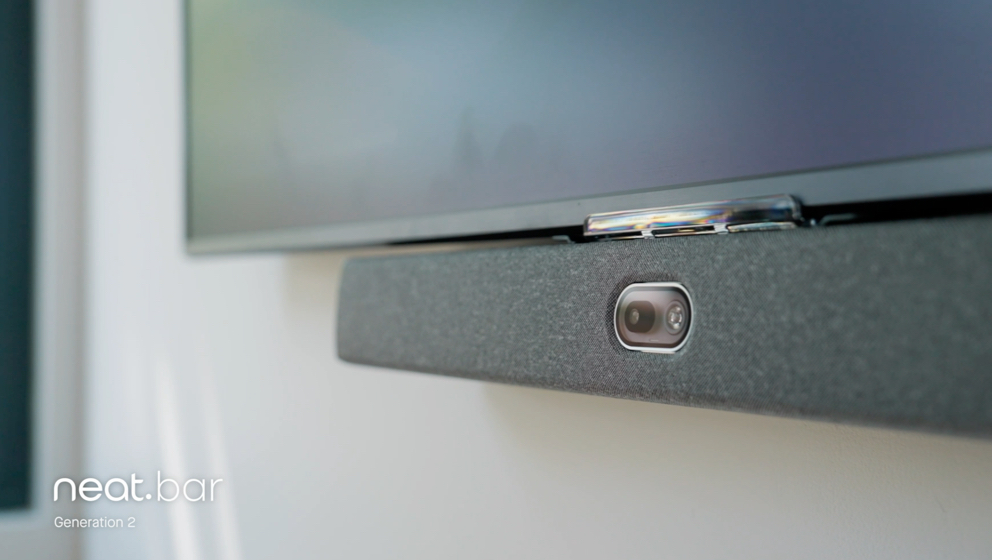
For huddle rooms and small to medium meeting spaces, Neat Bar Generation 2 combines intelligent audio, advanced video capabilities, and simple deployment into a single device that helps reduce meeting friction while delivering consistent collaboration experiences.
Where interactive collaboration is needed, Neat Board 32 combines a multi-touch display, intelligent camera, speakers, microphones, digital whiteboarding, and wireless content sharing into a compact device that’s ideally suited to brainstorming sessions, agile teamwork, and flexible collaboration spaces.
As AI becomes increasingly embedded in workplace collaboration, flexibility is becoming just as important as functionality. Through Neat Open, organizations can choose the collaboration platforms, applications, and AI experiences that best fit their needs while maintaining a consistent meeting experience. This open approach enables businesses to adopt new technologies as they emerge without being constrained by a closed ecosystem.
Underlying every Neat solution are Neat’s proprietary techhnologies—including intelligent framing, adaptive audio, and meeting equity features that continuously optimize meetings so participants can see, hear, and engage naturally, regardless of where they’re working.
By combining intelligent collaboration devices, proprietary experiences, and an AI-ready platform, Neat helps organizations create meeting environments that are simple to use, easy to manage, and ready for the future of hybrid work.
Perhaps it’s time to book a demo and experience them for yourself.
Frequently asked questions
What are virtual collaboration devices?
Virtual collaboration devices are hardware solutions designed to help people communicate and collaborate across different locations.
They include personal collaboration devices, video bars, interactive displays, touch controllers, and other technologies that support hybrid work by combining audio, video, content sharing, and collaboration capabilities into purpose-built solutions.
How do virtual collaboration devices improve teamwork?
Virtual collaboration devices improve communication by providing high-quality audio and video, reducing meeting friction, enabling seamless content sharing, and helping remote participants contribute as naturally as colleagues in the room. Many also include AI-powered capabilities that improve meeting productivity.
What types of virtual collaboration devices are available?
Common examples include personal collaboration devices, video bars, interactive collaboration boards, touch controllers, room scheduling displays, and companion devices that extend audio and video coverage in larger meeting spaces.
What is meeting equity?
Meeting equity refers to creating an experience where everyone can participate equally, regardless of whether they are attending a meeting in person or remotely. Modern collaboration technology helps achieve this through intelligent audio, video, and meeting experiences that keep all participants engaged.
How is AI changing collaboration technology?
AI is transforming collaboration by automating meeting summaries, transcription, speaker identification, intelligent framing, workflow automation, and search. These capabilities reduce administrative tasks and help teams focus on meaningful collaboration.
How do I choose the right collaboration device?
Start by evaluating your workspace size, meeting types, collaboration platforms, AI requirements, management capabilities, and future scalability. The right solution should balance performance, simplicity, flexibility, and ease of management.
Are virtual collaboration devices suitable for hybrid work?
Yes. Modern collaboration devices are specifically designed to support hybrid work by creating consistent meeting experiences for employees whether they are working in the office, at home, or from another location.
Sources
- New Future of Work: AI is Driving Rapid Change, Microsoft Research, https://www.microsoft.com/en-us/research/blog/new-future-of-work-ai-is-driving-rapid-change-uneven-benefits/
- Workplace Design and Trends, JLL, https://www.jll.com/en/trends-and-insights/workplace
- AV/IT Technologies Supporting a Culture of Collaboration, AVNetwork, https://www.avnetwork.com/news/av-it-technologies-supporting-a-culture-of-collaboration
- The WELL Standard, International WELL Building Institute, https://www.wellcertified.com/
- Exploring the Texture of Practices of Virtual Teamwork, Journal of Management Studies, https://doi.org/10.1080/14697017.2026.2631403
- The State of Hybrid Work, McKinsey & Company, https://www.mckinsey.com/capabilities/people-and-organizational-performance/our-insights