

Intelligence You Experience: The Rise of Thinking Environments
Simon Anthony Walker, May 20, 2026
Rooms that are always ready when you are. Technology that adapts so people don’t have to.
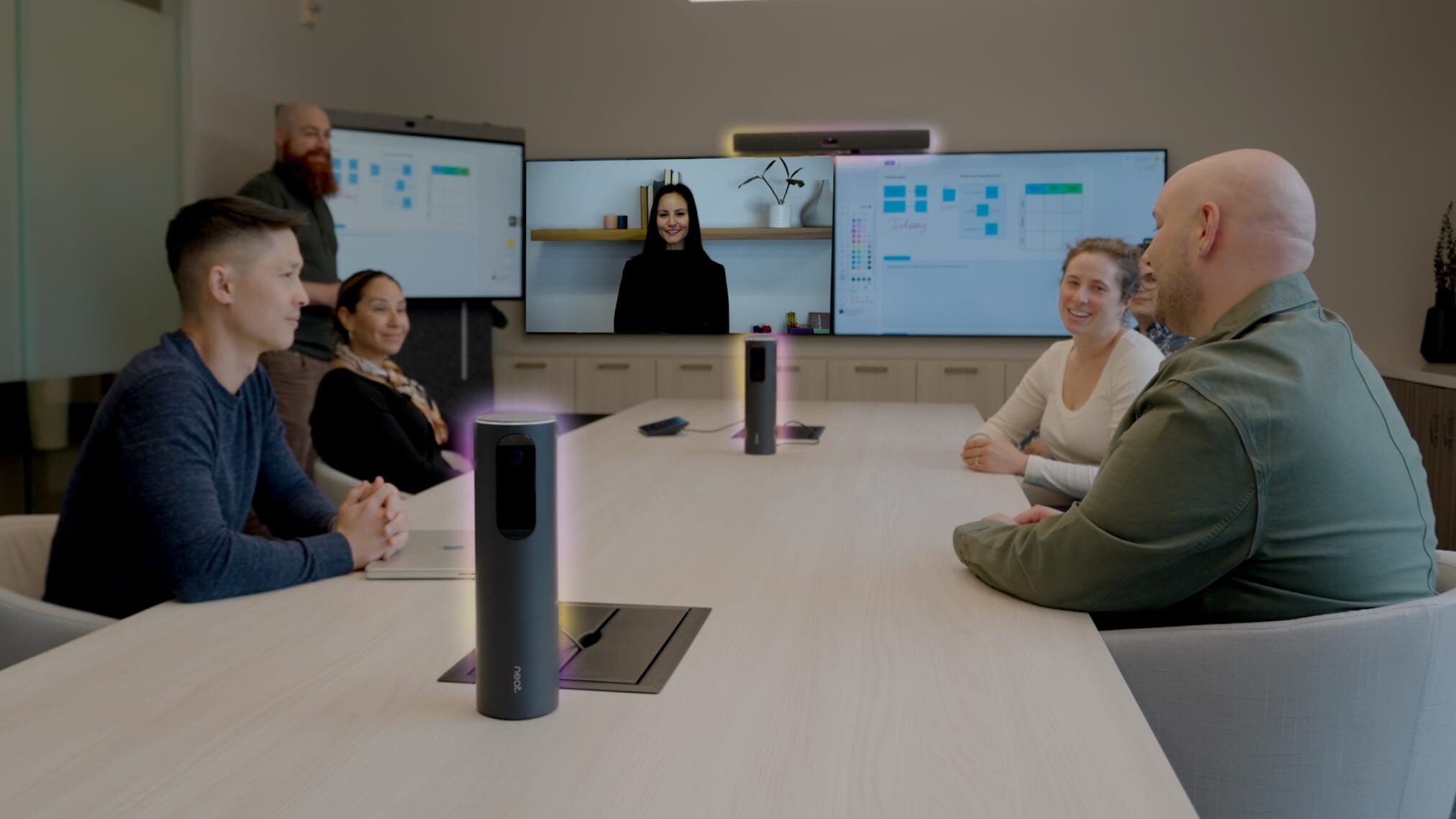
Meeting spaces are beginning to evolve from passive rooms into thinking environments that can sense, interpret, and respond in real time. This is about more than AI features. It’s about rethinking where intelligence lives to create experiences that feel more intuitive, immersive, and effortless for everyone involved.
For decades, meeting rooms have been built around centralized systems, disconnected peripherals, and complex infrastructure designed to capture meetings rather than understand them. As hybrid work evolved, those systems became increasingly difficult to scale, manage, and modernize.
But the real shift isn’t AI alone. It’s where intelligence lives.
At Neat, we believe collaboration spaces should do more than process audio and video. They should coordinate intelligently, adapt naturally to human interaction, and create experiences that feel effortless for everyone in the room and those joining remotely.
This is the foundation of the thinking environment.
Distributed intelligence changes everything
Delivering these experiences requires a fundamentally different approach.
Neat’s distributed architecture embeds intelligence throughout the room rather than concentrating it inside a centralized codec or hardware rack.
Every Neat device contributes compute, sensing, audio, video, and contextual awareness to a unified system. Cameras naturally frame interactions. Audio adjusts as conversations move around the space. Devices coordinate over IP to create collaboration experiences that feel inclusive, intuitive, and responsive as conversations unfold.
Built around people, not hardware
This architecture doesn’t just improve meetings. It expands what meeting spaces can become.
Traditional systems were designed around hardware limitations. Neat is designed around human behavior.
Static systems can’t keep up
Meetings are dynamic. People move. Conversations shift. Teams brainstorm, present, collaborate, and create in ways that traditional systems struggle to support. Neat’s AI-powered platform continuously adapts to the flow of human interaction, reducing friction while creating more immersive and equitable collaboration experiences. The result is technology that fades into the background while people stay focused on the conversation.
Complexity is no longer the compromise
A distributed architecture also creates something equally important for organizations: flexibility.
Rooms can scale without introducing unnecessary complexity. Devices can be deployed and reconfigured without invasive installations, while IT teams manage spaces globally through a centralized cloud platform. At the same time, organizations retain the freedom to support native meeting platforms, BYOD workflows, and emerging AI-powered applications without redesigning the room around rigid infrastructure.
The era of passive rooms is ending
This is more than another generation of meeting room technology. It marks the beginning of a more adaptive, intelligent way to collaborate.
As AI reshapes how people work, the most valuable technology won’t compete for attention. It will understand context, respond fluidly, and help teams collaborate more naturally than ever before.
Meeting spaces are becoming more aware, adaptive, and responsive.
That’s the future Neat is building—starting now.
Want to see what a thinking environment looks like in practice? Explore Intelligence You Experience, join a live demo or speak with a Neat specialist.